
Latest Release:
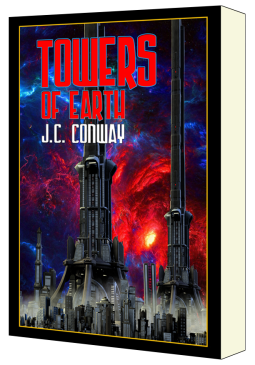 At the brink of an impending dark age, 15-year-old Allison Taylor escapes Earth on a colony ship to the stars. But a catastrophic quark drive failure forces a desperate, near-light-speed return a millennium into Earth’s future. Allison is surprised to find humanity in a “New Renaissance” and to see the Great Geostationary Towers her father engineered still stretching majestically from ground to high orbit, now housing Earth’s billions.
When Allison learns the “New Renaissance” is a mere façade, she struggles against crushing odds to reunite with her fellow colonists. Finally gaining the opportunity to flee again, she realizes her special knowledge of the Towers may empower her to break the Tower Administrators’ tyranny—but at the cost of her means of escape. Allison is torn. Will fulfilling her father’s dream be worth abandoning her chance to finally reach the stars?
TOWERS OF EARTH is available as an e-book at:
The print edition is available ot Amazon and Barnes & Noble.
Published by Double Dragon Publishing
Edited by Felicia Sullivan
Recent Short Stories:
The following two short story anthologies feature stories by J.C. Conway, and a host of other great writers.
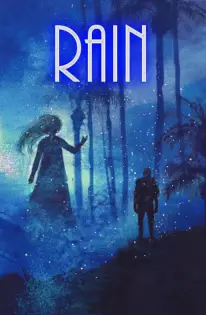 RAIN is a themed anthology. “Rain… can be benevolent and life-giving, can be torrential and damaging, even lethal. Thirteen authors came up with a wide variety of stories featuring rain, put up the umbrella and get reading. Oh, and be careful of the next downpour you walk in…” Among its stories are the following J.C. Conway tales:
- “Leaves of the Fall” is the tale of a young man in search of answers. He finds them. But what he finds is not what he might have expected.
- “Right as Rain” is a story about a family’s gift. But Liz and her Aunt Jennie disagree about its nature. Will the gift save the town from demise, or bilk its locals from their meager remaining cash?
MORE TAILS FROM THE BLUE GONK CAFE is a banquet of flash fiction, no story longer than 500 words–ranging from science fiction to gentle humor to outright horror. Each contributing author contributed 5 stories for readings at the Blue Gonk Café; one each for the Breakfast Menu, the Mid Morning Menu, the Lunch Menu, the Afternoon Menu, and the Tea Time Menu. It includes the following J.C. Conway flash stories:
- “There is Always Hope,” about the problem of filling big shoes.
- “Hunt and Gather,” about an attempt to return humanity to its roots, and the outcome of that attempt.
- “Market Plan,” about the desire for intergalactic help to save humanity from vapid consumerism.
- “Necessity,” about humanity’s future self-designed destruction, and the very human needs in response.
- “By the Glow of Inner Light,” about philosophical zombies–what they are, whether they are real, and what happens when the questions are finally answered.

What are readers and reviewers saying about HEARTS IN RUIN?

“Compelling insight into the cut-throat world of academia and a certain savagery that exists in terms of competitive edge and power.”
“kept my attention from start to finish”
“strong willed, intelligent protagonists… You don’t have to know archaeology or even understand when they discuss strata… entertaining and modern… easy read and a great book.”
“I had to hide from family…”
“melds a serious story with a wry sense of humor that keeps it a light and happy romance”
“The hero is a lovable and sexy beta hero and the first kiss scene is the best I’ve ever read. The heroine is bold, self-confident and competent, and I want to be just like her.”
“entertaining and informative novel”
“a wonderful portrayal of sexy archaeologists doing a legitimate archaeological dig.”
“This book didn’t make it to my list… I finished it. [Conway] weaves great sense of humor and light romance into a serious and intriguing story with interesting facts and realistic view of an archaeological dig.”
“I found this story to be fascinating.”
“A very enjoyable and entertaining read.”
HEARTS IN RUIN is available in Print and all e-Book formats from the following and other major outlets:
- Amazon Paperback Print Edition
- iTunes Store
- Amazon Kindle Edition
- Barnes & Noble Paperback or Nook Edition
- Liquid Silver Books All E-Book Formats
- Kobo Edition Formats
DON’T MISS THESE OTHER WORKS BY J. C. CONWAY
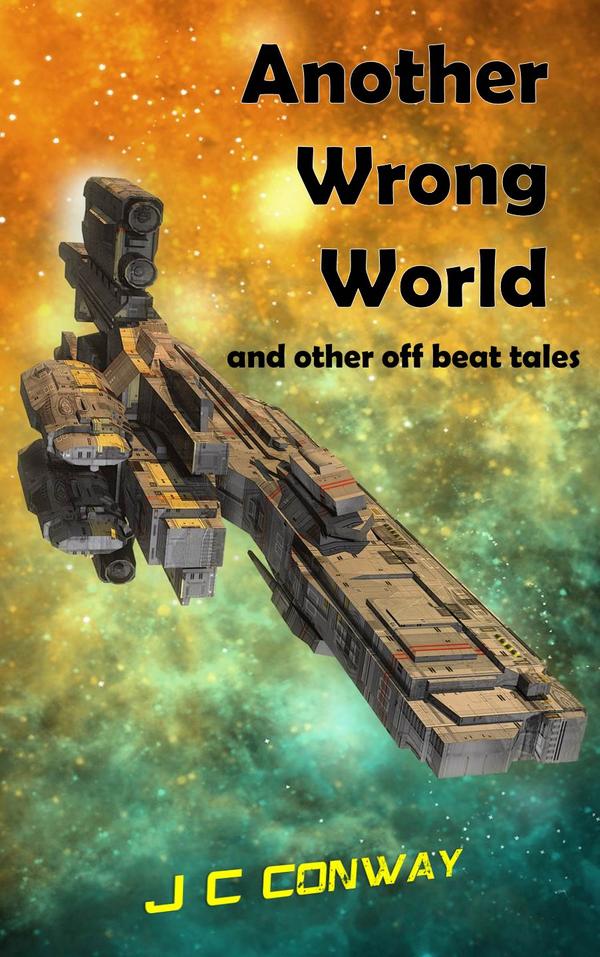
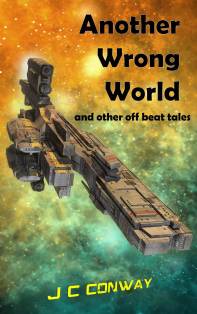 ANOTHER WRONG WORLD: AND OTHER OFF BEAT TALES
An anthology of short stories, including:
Early Retirement
Separation Anxiety
The Bender Beamer
Letters to the Luminiferous Aether
Seed of Doubt
November Elf
and more…
Available as a Kindle e-Book for $2.99

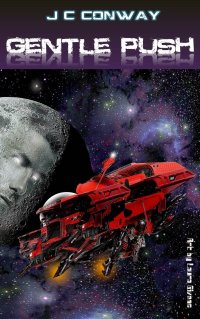 GENTLE PUSH
A science fiction short story in the foreseeable, star-faring future about human love, sacrifice, and hope. First published by Mindflights.
“Gentle Push by J.C. Conway is such a creative science fiction short. There’s a great deal going on, yet the pace never feels rushed.
“Conway is an excellent writer. His style is engaging, his characters fully realized, and his work is beautifully edited.”
Available as a Kindle e-Book for $1.29
 NICKEL STREAM
A science fiction short story in the star-faring future about industry, loyalty, and the value of minding one’s own business. First published by Perihelion Science Fiction.
“EVEN THROUGH THE FULLERENE-GLASS filter, the stream of Nickel-78 plasma brightened the work station transition chamber. It was a big leak … bigger than any Gina had seen. It reminded her of the early stories, when solar miners earned their hazardous-duty pay.”
Available as a Kindle e-Book for 99¢
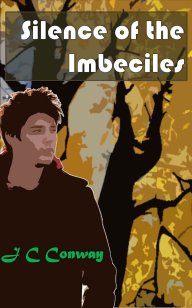 SILENCE OF THE IMBECILES
A modern-fantasy-based short story about teen angst and uncertainty. First published by Residential Aliens.
“Well written, understated and poignant.”
Available in e-Book formats from the following and other major outlets:
Smashwords
Amazon
iTunes Bookstore
Barnes & Noble
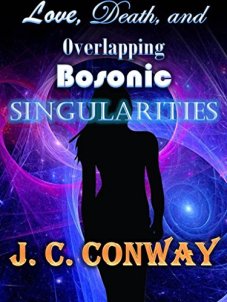 LOVE, DEATH, AND OVERLAPPING BOSONIC SINGULARITIES
A romantic science-fiction short story. Amy is caught in a boson-vault experiment gone wrong. The world as she knows it depends on fixing the problem. But is there only one option? And does she have the right to decide?
First published in The Lorelei Signal. Available in e-Book formats from the following and other major outlets:
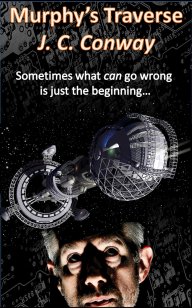 MURPHY’S TRAVERSE
A science-fiction short story first published in The Colored Lens.
It’s Murphy’s job to make sure his centuries-long interstellar colony mission arrives in one piece, and he has at his disposal the resources of the entire vessel and its advanced caretaker programs to ensure he meets that goal. With nothing in their path and a vast store of redundant systems, what could go wrong?
Available as a Kindle e-Book for 99¢
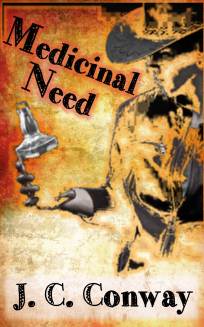 MEDICINAL NEED
A western short story first published in In Vino Veritas.
A cattle drive, a stray bullet, a sip of bourbon and a prayer. With the closest town doctor a day away, Luke has little more to rely on than the strange brew his trail boss has saved for just such an occasion…
Available in e-Book formats from the following and other major outlets:
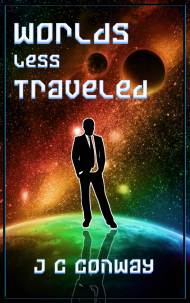 WORLDS LESS TRAVELED
Lawyers in space.
A terraform defect attorney at an off-world deposition with a failing anti-psychotic field.
First published in Perihelion Science Fiction. Available in e-Book formats from the following and other major outlets:
Smashwords
Amazon
iTunes Bookstore
Barnes & Noble
 BINGHAM’S DEEP WOODS FAIRIES
A modern teen fantasy short story. First published in The Lorelei Signal.
Carolyn is on a fairy hunt. She has the book, she has the time, and she knows where to look. But is fairy magic, and its source, something Carolyn is ready to face?
Available as a Kindle e-Book for 99¢
 SEPARATION ANXIETY
A science fiction short story. First published in NewMyths.com.
When the laws of the land meet the laws of quantum physics they forge a new meaning for the state of legal separation–and for Judge Bell, the results are appearing rather skewed.
Available as a Kindle e-Book for 99¢









 J. C. Conway
J.C., just wanna thank you for connecting me to this and linking my short story prompt bia Ruby8. Congratulations on your body of work. I look forward to getting to know you through your words and stories!