If you haven’t followed Canadian Astronaut Chris Hadfield–the first Canadian commander of the International Space Station and “the most social-media savvy” astronaut in space–you should, at a bare minimum, at least see his farewell song at the end of his mission, revising David Bowie’s famous song, Space Oddity.
This one is a must.
Hadfield’s ISS Mission ran from December 19, 2012 to May 12, 2013. He is presently rehabilitating from the extended stay in microgravity. Hadfield is the recipient of numerous awards and special honors, including appointment to the Order of Ontario in 1996, receipt of the Meritorious Service Cross and Vanier Award in 2001, the NASA Exceptional Service Medal in 2002, and the Queen’s Golden Jubilee Medal in 2003.
Hadfield is working on the first original music album to be recorded in orbit. The first song recorded in space, Jewel in the Night, was released via YouTube on Christmas Eve 2012.
The 18th issue of Mystic Signals has been released, including my short science-fiction romance story, “Love, Death and Overlapping Bosonic Singularities.” The anthology includes all of the stories published in the April issue of The Lorelei Signal, the May issue of Sorcerous Signal, and certain dedicated short stories.
This is my second story appearing in Mystic Signals. The first was “Bingham’s Deep Woods Fairies,” in issue 16.
Bosonic Singularities first appeared in The Lorelei Signal. The Universe has shattered at the hands of three technicians trying a boson-vault experiment. Amy, a middle-management woman stuck in the mess, must make a decision about restoring the universe to its “proper” alignment.
Mystic Signals, edited by Carol Hightshoe, is produced by Wolfsinger Publications in Colorado. Wolfinger produces, in addition to its online periodicals The Lorelei Signal and Sorcerous Signal, a line of fantasy and science fiction anthologies and novels.
The Lorelei Signal in particular is dedicated to stories involving strong female characters.
CBS News covered NASA’s Kepler Mission on Sunday morning. For a short treatment (just 5 seconds longer than 5 minutes), it was very informative. If you missed it, please spare the five minutes and go to CBS’s video of the piece.
The Static Movement themed anthology “Broken,” is filling with stories (over 61,000 words now) and will close to submissions when it reaches 70,000. Static Movement anthologies are “for the love” markets. The editor for this anthology is Dorothy Davies. Following is a description of the theme:
This is one to stretch your imagination! What is broken, what does it do to a life when that thing is broken? is the life broken? what impact does it have on those who owned it/knew it/cared about it? allow your ideas to run and see where we can go with this one!
Static Movement accepts reprints as well as first-run stories. As of today, the anthology has accepted submissions from Olivia Arieti, John C. Conway, Ron Koppelberger, Troy Frings, David Frazier, David Griffin, Anna Harris, Christopher Hivner, A J Humpage, Ken Goldman, Ken L Jones, B T Joy, Neil Leckman, Thomas Malafarina, Bruce H. Markuson, Jordan Elizabeth Mierek, Marija Elektra Rodriguez, Brianna Stoddard, Matthew Wilson and Michael Wynn.
If you have a story in almost any genre about something broken, the submission guidelines can be found at the Static Movement Message Board for this anthology.
Several of my short stories have featured modified asteroids as useful structures, predominantly in Trojan Orbits. But the first asteroids that are likely to have a tremendous impact on humanity (good or bad) are the “near-Earth” asteroids–those bodies that orbit the Sun and cross Earth’s orbit from time to time. Those asteroids feature prominently in one of my works not yet published.
Two important pieces of near-Earth asteroid news occurred today–a government hearing on the concept of detection and deflection of dangerous near-Earth asteroids, and a NASA announcement of a plan to capture an asteroid for study.
Detect and Divert. The U.S. House of Representatives Committee on Science, Space and Technology took testimony today in its Hearing on Threats from Space: A Review of Private and International Efforts to Track and Mitigate Asteroids and Meteors. Providing testimony today were Dr. Ed Lu, Chairman & CEO of the B612 Foundation, Dr. Donald K. Yeomans, Manager of the Near-Earth Objects Program Office of Jet Propulsion Laboratory, and Dr. Michael F. A’Hearn, Vice-Chair of the Committee to Review Near-Earth Object Surveys and Hazard Mitigation Strategies for the National Research Council.
The B612 Foundation is a non-profit organization established in 2002 that arose from an asteroid deflection workshop. According to today’s testimony, the Foundation plans to have the Sentinel Telescope launched in 2018. The Sentinel Telescope will be located between Earth and the Sun. The Sun will always be behind the lens. Therefore, the Sun won’t inhibit the Sentinel Telescope’s ability to detect NEOs.
The Hearing Charter references the two February 15 events–the near pass of Asteroid 2012 DA14 and the Chelyabinsk meteor–describing the Chelyabinsk meteor explosion as having 20 times the power of the Hiroshima atom bomb. The Charter describes its overarching questions as follows:
Do we have the tools and technology necessary to detect and track Near Earth Objects?
What are the most viable efforts to focus on in the next 5 to 7 years that will yield the most progress in identifying and cataloging the NEO [“near-Earth object”] threat?
Are we tracking the right size objects, specifically the ones that can cause significant harm?
Once we identify an object, what are our means of tracking it?
What are our contingencies and mitigation capabilities if we determine there is a threat from a NEO impact?
The Charter incorporated the following visual census:
The testimony was important, as it was both frank and provided by experts in the field. Among the notable statements (there were too many to quote) were the following:
“We should not have to find out how big a tsunami a certain asteroid will create; we should deflect it before it happens.”
Dr. Ed Lu
Representative Stewart: “Is there anything we could’ve done about an asteroid impact with a 2 year warning?”
Dr. Ed Lu: “No.”
“Five years or less, it’s really hard unless you’ve thought the problem through and designed things–maybe have components built–maybe have a full system …”
Dr. A’Hearn
“In less than 5 years there’s no time to do anything unless all planning has been done ahead, and even then it’s difficult.” Dr. Michael F. A’Hearn
“We have to bring in folks that are more experienced in communications; not just scientists.” Dr. Donald K. Yeomans
Among other things, Dr. Yeomans highlighted the existence of current facilities and programs to detect near-Earth objects. Dr. Lu expressed his desire to provide a cheaper, private-sector advancement on those accomplishments. Dr. A’Hearn emphasized the importance of a multi-national effort to test deflection capabilities.
Catch and Mine. NASA announced today its intention to capture an asteroid and send astronauts to study it. NASA Administrator, Charles Bolden, said in a statement before the plan was announced today, “This mission represents an unprecedented technological feat that will lead to new scientific discoveries and technological capabilities and help protect our home planet.”
The proposed budget is around $50 million less than sought a year ago, but still about $1 billion more than the agency’s current spending plan. Nevertheless, the plan fits with the current administrations stated goals of (a) include learning how to identify asteroids heading towards Earth to change their course, (b) finding destinations where astronauts can go as they try to learn how to make the longer trip to Mars, and (c) provide evidence of opportunities for space investors.
NASA illustrated its concept in a video, showing the capture of an asteroid.
This mission, in connection with the ever-growing data of near-Earth objects and constantly-developing plans to intercept asteroids crossing Earth’s path, provide valuable information and potential opportunities for those asteroid-mining ventures presently in existence, and future ventures with similar goals.
For example, NASA has made available on its website approximately 100 asteroid intercept trajectories, with projected launch dates, intercept dates, and identification and orbits of known asteroids of interest.
As our knowledge of near-Earth objects increases, so does our capability of utilizing and mastering near-Earth space. This is a region much more accessible than Mars, or even the Moon. Many predict that near-Earth locations are the next step for humanity in space. These discussions and proposed missions move in that direction.
My short story, “Love, Death and Overlapping Bosonic Singularities,” is now published and available online in the April-June edition of The Lorelei Signal, edited by Carol Hightshoe. The story is a science fiction romance about Amy Budge, a research-division middle-management woman suffering through the universe-shattering consequences of a boson-vault experiment gone wrong.
The story begins:
Amy’s senses returned as the world coalesced. Where now? She assessed, finding herself seated in a conference room full of attorneys. She saw no signs of alarm. They seemed unaware reality had just dissolved and reassembled itself in a different order. To them, this was a normal moment in a reliable space-time sequence.
They were wrong. But this rearrangement wasn’t so bad. She was pleased to see Pat Billings across the polished oak table. In this version of the universe he was an attorney.
…
It seems to mostly get worse for Amy from there.
The wonderful artwork for the piece is by Lee Kuruganti, who was also the design winner for the 2oo8 Hugo Award Base, and who also illustrated Twisted Thorn, by Richard King Perkins II, in the same issue.
“Love, Death and Overlapping Bosonic Singularities,” will also appear in a print edition of Mystic Signals in the next month or so.
The Lorelei Signal is a quarterly fantasy and science fiction electronic magazine that features strong female characters. In addition to its online and print magazines, WolfSinger Publications produces books and anthologies. Its present call for submissions is for the anthology, Metastasis, about cancer, edited by Rhonda Parrish.
The John W. Campbell Award nominees were announced yesterday along with the 2013 Hugo Award nominees. The John W. Campbell Award is not a Hugo Award. It is an award sponsored by Dell Magazine to be given to the best new science fiction or fantasy writer whose first work of science fiction or fantasy was published in a “professional publication” in the previous two years. What constitutes a “professional publication” is specially defined. (See Eligibility F.A.Q.)
Many other talented new authors qualified for the Campbell Awards this year, and all those that were considered are listed here. Members of the World Science Fiction Society will vote for the winner. The 2013 winner will be announced at the World Science Fiction Convention, LoneStarCon 3, in September.
The 2013 Hugo Award final nominees for best works in Science Fiction and Fantasy in 2012 were announced today at 3 p.m. Central Time.
The Nominees for BEST NOVEL (from 1113 ballots) are:
2312 by Kim Stanley Robinson (Orbit)
Blackout by Mira Grant (Orbit)
Captain Vorpatril’s Alliance by Lois McMaster Bujold (Baen)
Redshirts:A Novel with Three Codas by John Scalzi (Tor)
Throne of the Crescent Moon by Saladin Ahmed (DAW)
The Nominees for BEST NOVELLA (from ballots) are:
After the Fall, Before the Fall, During the Fall by Nancy Kress (Tachyon Publications)
The Emperor’s Soul by Brandon Sanderson (Tachyon Publications)
On a Red Station, Drifting by Aliette de Bodard (Immersion Press)
San Diego 2014: The Last Stand of the California Browncoats by Mira Grant (Orbit)
“The Stars Do Not Lie” by Jay Lake (Asimov’s, Oct-Nov 2012)
The Nominees for BEST NOVELETTE (from 616 ballots) are:
“The Boy Who Cast No Shadow” by Thomas Olde Heuvelt (Postscripts: Unfit For Eden, PS Publications)
“Fade To White” by Catherynne M. Valente (Clarkesworld, August 2012)
“The Girl-Thing Who Went Out for Sushi” by Pat Cadigan (Edge of Infinity, Solaris)
“In Sea-Salt Tears” by Seanan McGuire (Self-published)
“Rat-Catcher” by Seanan McGuire (A Fantasy Medley 2, Subterranean)
And the Nominees for BEST SHORT STORY (from 662 ballots) are:
“Immersion” by Aliette de Bodard (Clarkesworld, June 2012)
“Mantis Wives” by Kij Johnson (Clarkesworld, August 2012)
“Mono no Aware” by Ken Liu (The Future is Japanese, VIZ Media LLC)
The other Hugo Award categories are:
Best Related Work
Best Graphic Story
Best Dramatic Presentation “Long Form” (more than 90 minutes)
Best Dramatic Presentation “Short Form” (less than 90 minutes)
Best Editor Short Form
Best Editor Long Form
Best Professional Artist
Best Semiprozine
Best Fanzine
Best Fancast
Best Fan Writer
Best Fan Artist
All of the nominees for all categories can be found today at the LoneStarCon 3 Site.
The World Science Fiction Society members of LoneStarCon 3 will vote over the next several months to determine the final winners in each category. The winners will be announced at the World Science Fiction Convention, LoneStarCon 3, in San Antonio Texas, on September 1, 2013.
Congratulations to all of the nominees and the publishers and editors they worked with.
Update: The Editor has now Closed this anthology to submissions.
This weekend is the last chance to submit stories to the Static Movement drink-themed anthology, In Vino Veritas, edited by Dorothy Davies. At present, the anthology is slated to feature stories from the following talented writers:
Olivia Arieti
Tammy Branom
John Conway (2 stories)
John H Dromey
Dave Fragments
Ken Goldman
A J Humpage
Ken L Jones (3 stories)
B T Joy
Ron Koppelberger (3 stories)
Neil Leckman (2 stories)
David S Pointer
Marjia Elektra Rodriguez
TM Simmler
Brianna Stoddard
George Wilhite
Big Jim Williams (2 stories)
Matthew Wilson (4 stories)
Stories submitted this weekend will meet the announced deadline. After that, the anthology will be in editing and on the path to production. Send submissions to Dorothy Davies in accordance with these Submission Guidelines.
The Romance Writers of America announced this week the finalists in its two very popular annual contests: The RITA® Awards and the Golden Heart® Awards.
The RITA recognizes excellence in published romance fiction. The Golden Heart recognizes excellence in unpublished romance manuscripts. The winners in each category are announced each year at the RWA’s national conference, to be held this year in Atlanta, Georgia.
The Golden Heart is particularly interesting to agents and publishers looking for new talent. An exciting RITA category, and a great suggestion for new romance authors to consider, is the Best First Book Category. The finalists this year in that RITA category are:
The Anatomist’s Wife by Anna Lee Huber; Penguin Group USA, Berkley Publishing Group; Michelle Vega, editor
Crazy Little Thing by Tracy Brogan; Amazon Publishing, Montlake Romance; Kelli Martin, editor
Firelight by Kristen Callihan; Grand Central Publishing, Forever; Alex Logan, editor
Forged in Fire by Trish McCallan; Amazon Publishing, Montlake Romance; Lindsay Guzzardo, editor
Ghost Planetby Sharon Lynn Fisher; Tom Doherty Associates, Tor Books; Whitney Ross, editor
The Haunting of Maddy Clareby Simone St. James; Penguin Group USA, New American Library; Ellen Edwards, editor
My Life Next Doorby Huntley Fitzpatrick; Penguin Group USA, Dial Books for Young Readers; Jessica Garrison, editor
Pushing the Limits by Katie McGarry; Harlequin, Harlequin Teen; Margo Lipschultz, editor
The other RITA categories for 2013 are:
Contemporary Single Title Romance
Historical Romance
Inspirational Romance
Long Contemporary Series Romance
Novel with Strong Romantic Elements
Paranormal Romance
Romance Novella
Romantic Suspense
Short Contemporary Series Romance
Young Adult Romance
This year’s Golden Heart categories are:
Contemporary Series Romance
Contemporary Single Title Romance
Historical Romance
Paranormal Romance
Romantic Suspense
Young Adult Romance
A complete list of the finalists in each category is available at RWA’s site. Each finalist deserves warm congratulations, as do the thousands of writers each year that submit exemplary work. The competition for these contests tough.


 The B612 Foundation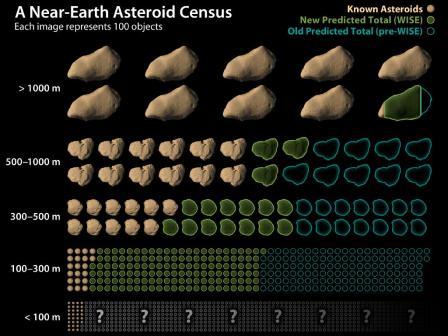


 The 2013 Hugo Award final nominees for best works in Science Fiction and Fantasy in 2012 were announced today at 3 p.m. Central Time.


 The World Science Fiction Society members of LoneStarCon 3 will vote over the next several months to determine the final winners in each category. The winners will be announced at the World Science Fiction Convention, LoneStarCon 3, in San Antonio Texas, on September 1, 2013.
 Olivia Arieti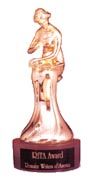







 J. C. Conway